2026-10-10 ·
How Blizzards and Lake Winds Damage Roofs in Duluth
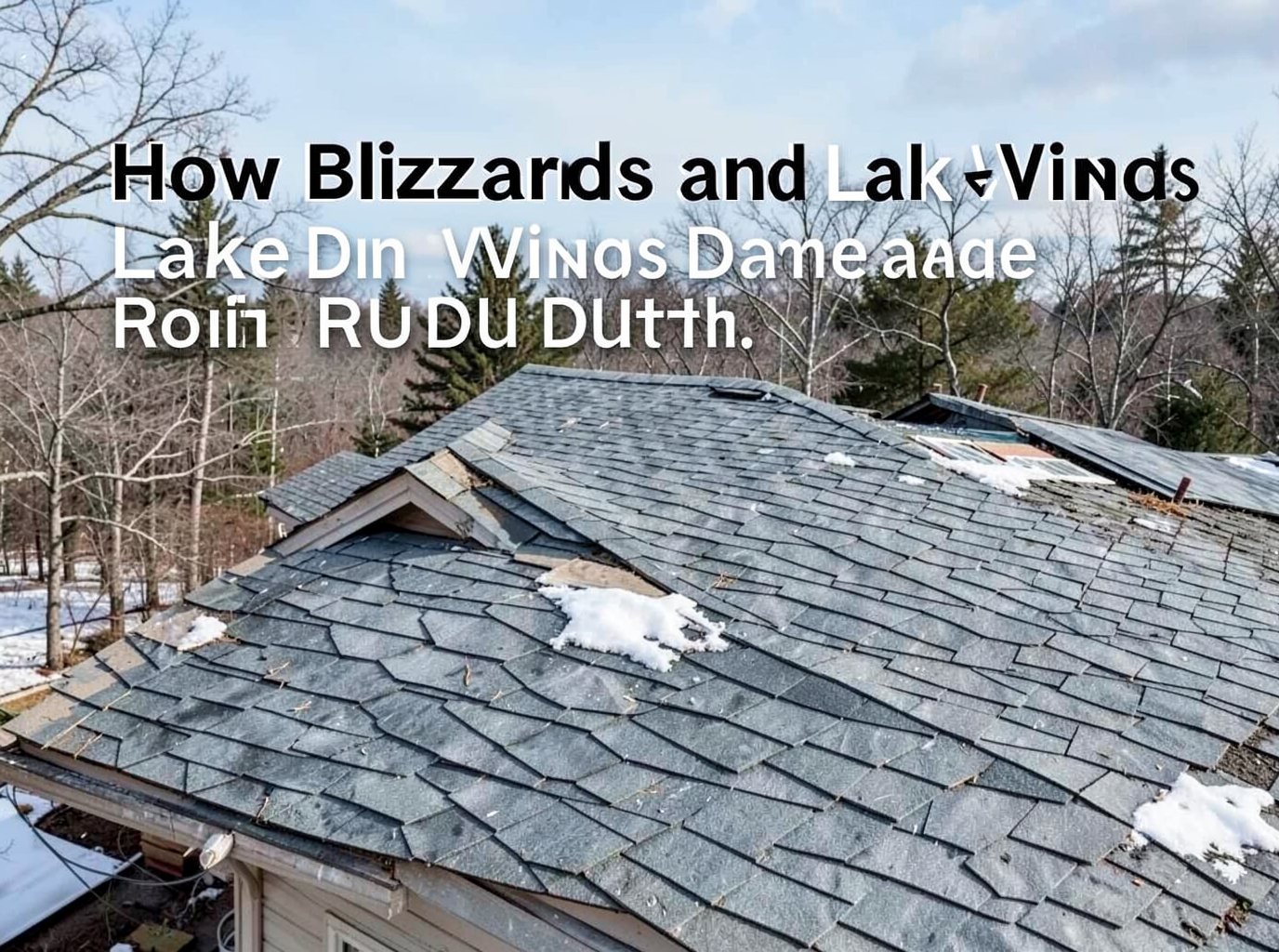
Blizzards and lake winds in Duluth lift shingles, tear flashing, and pack snow into valleys on homes throughout East Hillside, Park Point, and Lincoln Park. These storms push 40–60 mph gusts off Lake Superior that pry at edges while heavy snow loads add 20–40 pounds per square foot on flatter sections.
Lake Winds and Shingle Uplift on Exposed Slopes
Sustained winds from Lake Superior hit west- and north-facing slopes hardest in neighborhoods like West Duluth and Central Hillside. Older homes built before 1950 often have single-layer shingles that lift at the corners first when gusts exceed 45 mph. Homeowners in Park Point see this on low-pitch roofs where wind can get underneath and peel sections back in one storm. The same winds drive snow into every seam around chimneys and pipe boots, creating entry points that stay hidden until spring melt. Checking these edges after each major wind event prevents small tears from turning into full leaks during the next snowfall.
Ice Dams Formed by Lake-Moderated Snow Cycles
Cool summers and sudden cold snaps moderated by Lake Superior create repeated freeze-thaw cycles that build thick ice dams along eaves in Duluth Heights and Lakeside. Snow melts slightly during the day then refreezes at night, backing water under shingles on homes in Morgan Park and Denfeld. Steep roofs common in Piedmont Heights shed snow unevenly, leaving heavy drifts that add pressure exactly where flashing meets the wall. These dams often form first on the north side of houses near Enger Tower because that exposure receives less sun. Addressing the ice before it forces water through the underlayment keeps damage from reaching the attic space.
Wind-Driven Snow and Valley Leaks in Older Stock
St. Louis County homes from the 1920s through 1960s in East Hillside and Central Hillside have complex rooflines with multiple valleys that trap wind-blown snow. When blizzards dump 12–18 inches overnight, the packed snow melts slowly and finds every nail hole or deteriorated boot around vents. Homes near the Aerial Lift Bridge face extra exposure because open water allows winds to carry moisture farther inland. The result shows up as stains on ceilings directly below those valleys weeks after the storm passes. Regular inspection of these intersections after winter events catches the early signs before insulation gets saturated.
Practical Steps After a Duluth Blizzard
Walk the perimeter after winds drop and note any lifted shingles or missing granules, especially on the Lake Superior side of the house. Clear gutters of packed snow so meltwater can drain instead of backing up under the edge. Homeowners in Superior and nearby areas often see the same patterns because the same lake winds cross the bay. For guidance on seasonal checks that match these conditions, review the Duluth Seasonal Roof Maintenance Checklist (Spring/Fall). When damage appears after a storm, the After the Storm: 8 Steps Before You Call a Roofer guide outlines the next actions. If wind has already lifted sections, wind damage roof repair addresses the specific uplift patterns common here. Persistent ice along eaves requires ice dam removal & prevention before meltwater reaches the interior.